Dutch processing is a method that alkalizes cacao beans with potassium or sodium carbonate—and that is one of the main reasons behind the flat and slightly salty taste in processed cacao powder, as well as in chocolate made with these ingredients, which lowers it to the level of candy.
Dutch processing was developed in 1828 by a Dutch chemist named Coenraad Van Houten and paved the way for mass-produced chocolate. Mr. Van Houten is also responsible for another milestone processing method: the separation of the cacao bean into cacao butter and cacao powder. In this process, the ground, melted cacao bean is pressed through a commercial press and split into cacao cake and cacao butter.
The reason behind all this effort was a burning desire to create a product with high competitive power. Until almost the mid-19th century in Europe, chocolate was consumed as a liquid drink rather than as a solid food. It was seen as a promising alternative to coffee with great potential. The problem was that chocolate was very hard to blend with water. Unlike coffee beans (which contain about 10% fat), roughly 50% of a fermented cacao bean is cacao butter—a very healthy vegetable fat. This fat content was the culprit preventing chocolate from mixing easily with water. Van Houten solved the problem by removing the fat (cacao butter) from the whole ground bean.
Almost two centuries have passed since this ingenious invention. Chocolate is now a solid food, no longer competing with coffee. So why are these two processing methods still at the heart of the modern, mass-produced chocolate industry?
There are several reasons. The number one reason is the effect of alkali processing on the pH level of cacao beans. The natural pH of cacao is around 4.5–5, but most mass-production companies artificially raise it to 8.5–9.5 with potassium or sodium carbonate. This allows them to combine beans of varying quality—mixing okay beans with cheap, acidic, bitter, and nearly inedible ones—to create a product with a relatively palatable flavor profile.
Alkalizing cacao is done by adding chemical agents (most commonly sodium carbonate dissolved in water) directly to cacao powder, liquor, or beans/nibs and leaving them to rest in the solution. The mixture is then cooled and dried, leaving alkali in or on whatever form of cacao it was applied to. Duration, temperature, and intensity of the alkali are the key elements that determine the condition of the final product.
It is a well-known fact that alkalizing cacao nibs or powders significantly damages both the antioxidants and the authentic flavor profile of the bean. In a way, it flattens live cacao by stripping away its colors, quirks, and personality—allowing manufacturers to create chocolates as standardized as McDonald’s burgers. One of the most interesting articles on this subject can be found in The Journal of Agricultural and Food Chemistry (2008, 56). Here is a link to the full article. (https://pubs.acs.org/doi/10.1021/jf801670p) As you’ll read there, alkalizing destroys 60–90% of antioxidants as well as much of the natural color and flavor of cacao.
I’m not entirely sure what the law says in Canada (most companies do not disclose Dutch processing on their labels), but in the United States, food labeling requires that alkalized (dutched) cocoa powders or liquors be declared as “cocoa [liquor] treated with alkali.” Labeling requirements vary by country, making it difficult for consumers to know whether the chocolate they are buying uses natural or alkalized cocoa.
Nonetheless, here are a few tips to help you identify Dutch-processed chocolate:
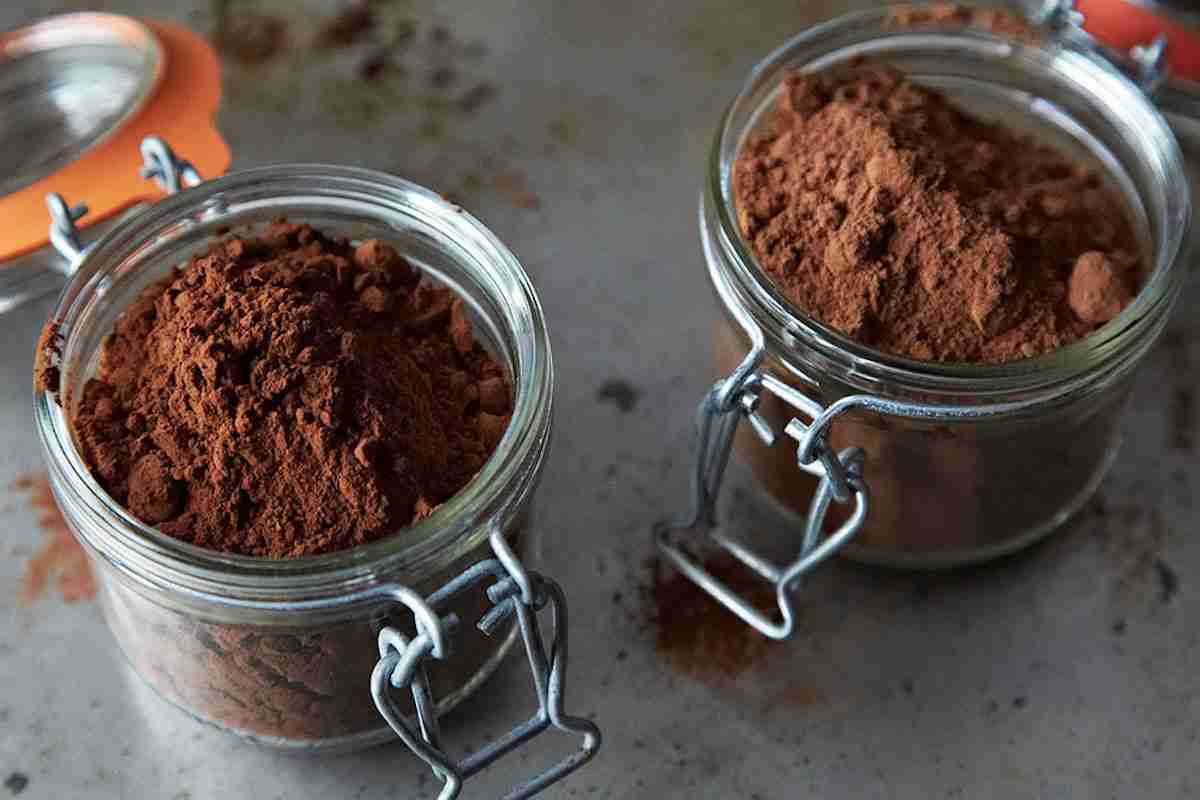
• The natural color of cacao ranges from light brown to slightly darker reddish-brown—similar to the color of milk chocolate. A chocolate made from undutched beans will be lighter in color, more fragrant, and multidimensional in flavor, especially when made from fine-flavor heirloom beans.
• Dutch-processed chocolate, by contrast, will be extremely dark brown to black, and one-dimensional on the palate because it has been damaged and denatured through the Dutching process.
In Summary:
Dutching improves cacao powder’s bonding ability with water or other fats rather than truly increasing solubility in warm water. Its most visible effects are on flavor and color: it makes chocolate extremely dark brown to black while destroying almost every subtle detail—together with most of the antioxidants (up to 90%)—in the original bean.
In 1828, the centuries-old, thick, foamy, medicinal, ceremonial drink called “chocolate” was dethroned by Mr. Van Houten’s “instant cocoa drink” idea. His twin inventions of defattening and alkalizing cacao opened the door to large-scale manufacturing of cheap chocolate for the masses and fundamentally changed the history of chocolate making.
⸻
P.S. Please let us know if you have any questions or thoughts to add on this topic.
—Paul Dincer
Owner and Founder of Koko Monk Chocolates, Vancouver